
Municipal codes and ADA basics for commercial landscape design projects
By Rod Burnett · Updated 2026-07-05
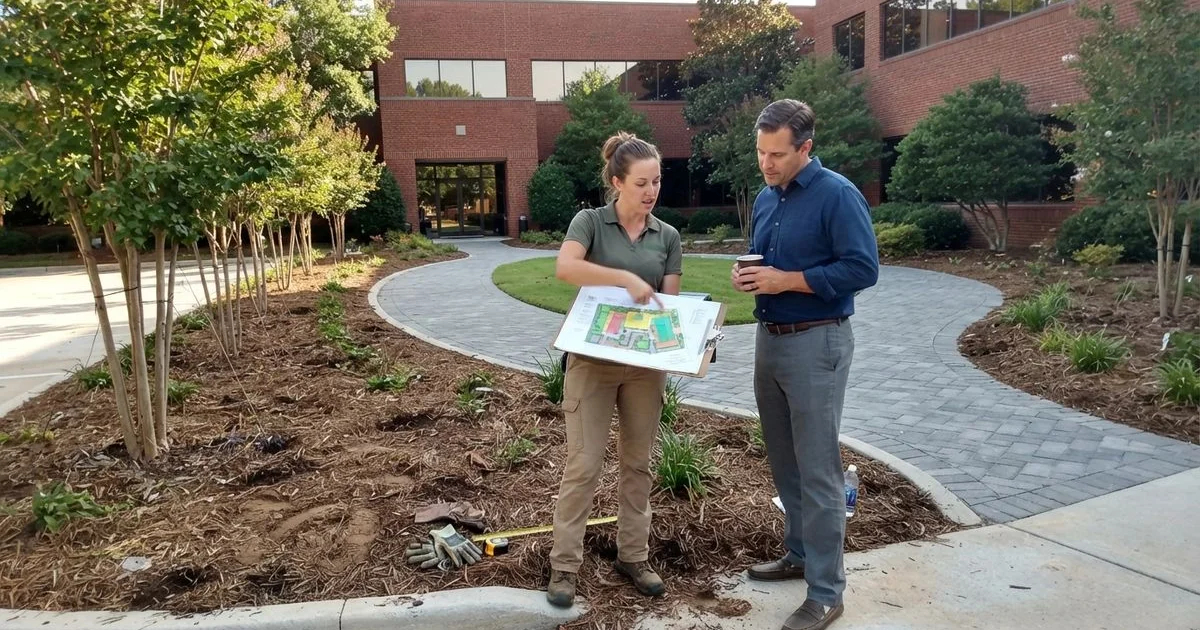
This is general information, not legal advice. Municipal codes and ADA interpretation vary by jurisdiction, so confirm requirements with your local planning department and a qualified designer or engineer before finalizing a commercial project.
Commercial landscape design projects in Charlotte Metro carry requirements that most homeowners never encounter, since municipalities regulate parking lots, buffer areas, and accessibility differently for commercial and multi-family sites than for single-family homes. Getting this wrong at the design stage is expensive to fix after installation.
Municipal landscape ordinances
Most cities and counties in the region require a minimum amount of planted area on commercial sites, shade coverage in parking lots (often expressed as a percentage of paved area or a tree every certain number of spaces), and buffer strips of plantings between a commercial property and adjacent residential zoning. These requirements are usually spelled out in a zoning or unified development ordinance specific to the municipality, and they can differ noticeably between, for example, uptown Charlotte and a suburban municipality in the metro.
| Requirement type | What it typically covers | Who usually checks it |
|---|---|---|
| Parking lot shade | Minimum tree coverage over paved parking | Planning or zoning department |
| Buffer strips | Screening plants between commercial and residential zoning | Planning or zoning department |
| Minimum planted area | A percentage of the site kept as planted, non-paved area | Planning or zoning department |
| Stormwater management | Detention, retention, or filtration for site runoff | Engineering or stormwater department |
ADA accessibility basics that affect design
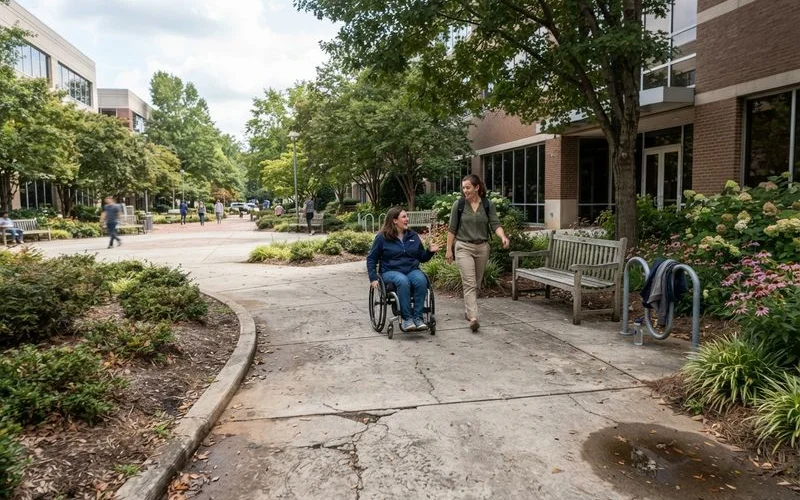
Any path a customer, employee, or visitor is expected to use, from an accessible parking space to the entrance, needs to meet accessible route requirements: minimum width, maximum slope, and a stable, slip-resistant surface. This affects landscape design directly, since planting beds, retaining walls, and drainage grates near these paths need to be placed so they do not narrow the route or create a tripping hazard as plants mature. A path that is compliant at installation but gets crowded by overgrown plantings within a year or two is a common, avoidable mistake.
Stormwater is its own layer of review
Commercial sites, especially larger ones with significant paved area, often trigger stormwater management requirements that residential projects rarely face: detention ponds, bioswales, or permeable paving to manage runoff before it leaves the site. This usually involves a civil engineer working alongside the landscape designer, since the calculations for stormwater capacity go beyond what a landscape design plan alone typically covers. Confirm early in the project who is responsible for this piece and whether it is already priced into your proposal.
Getting the sequencing right
Municipal review for a commercial landscape project can take weeks to months, depending on the jurisdiction and project size, so building that timeline into your project schedule from the start avoids a costly delay later. Ask your designer whether they have experience navigating your specific municipality’s review process, since familiarity with a particular planning department’s expectations can meaningfully shorten the back-and-forth. Residential projects face a lighter version of this process; see our guide on permits, HOA rules, and property lines to check before a landscape design project for what applies to a typical home landscape.
A practical starting checklist
Confirm your municipality’s landscape ordinance requirements for your zoning category, check whether your project scope triggers stormwater review, and have your designer or a civil engineer confirm ADA path requirements before the plan is finalized. Handling these three items early prevents the most common and most expensive commercial project delays.
Compare designers with commercial project experience from our home page, and see our methodology for how listings on this directory are evaluated.
FAQ
- Do commercial properties have different landscape rules than homes?
- Yes. Most municipalities apply landscape ordinances to commercial and multi-family properties that do not apply to single-family homes, covering things like parking lot shading, buffer strips between properties, and minimum planted area.
- What ADA requirements apply to landscape design?
- Accessible route width, slope, and surface requirements apply to any path a customer or tenant is expected to use, including from parking to the entrance. Plant placement also needs to keep those paths clear at maturity, not just at installation.
- Who is responsible for stormwater compliance on a commercial site?
- Typically the property owner, though the designer or civil engineer of record usually handles the calculations and plan submission. Confirm this division of responsibility before the project starts.
- Does a commercial landscape project always need a permit?
- Larger changes, new parking lot landscaping, stormwater management features, and any grading changes usually do. Smaller refresh projects on an already-compliant site sometimes do not, but this depends on your municipality.