
Who is liable for drainage and retaining wall problems between neighbors
By Rod Burnett · Updated 2026-07-16
This is general information, not legal advice. Drainage and boundary liability rules vary by state and by the specific facts of a situation, so consult a local attorney or your municipality for guidance on your specific property.
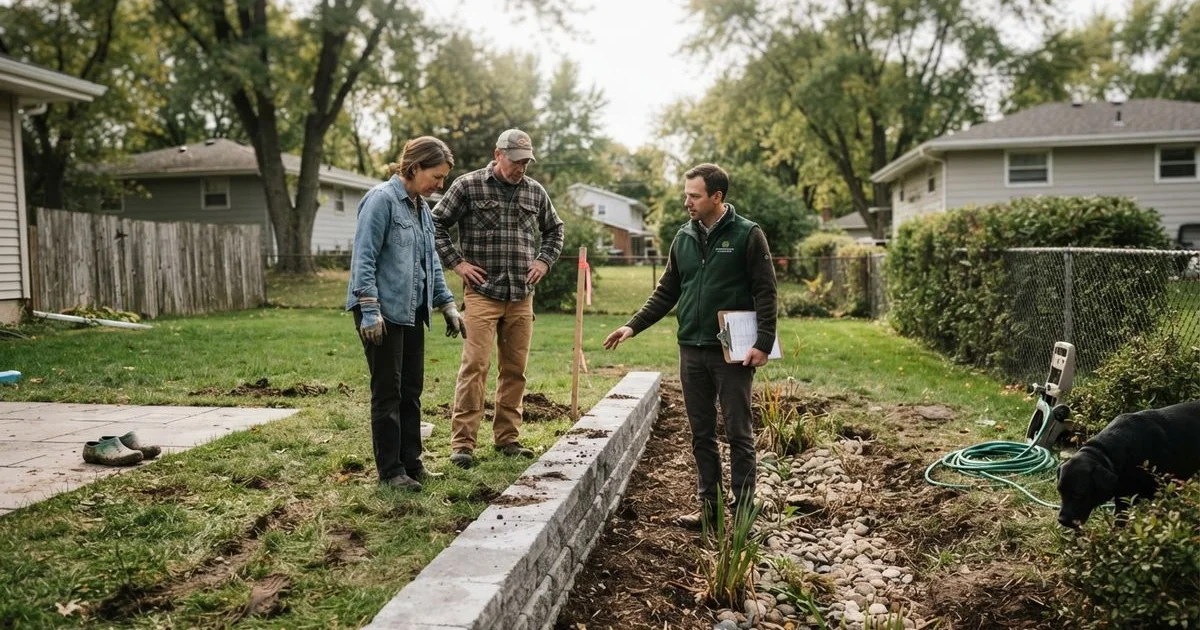
Retaining walls and grading changes near a property line are one of the more common sources of neighbor disputes in hardscape design projects, and the liability question is less straightforward than most homeowners assume.
The general rule on drainage
Many jurisdictions, including North Carolina and South Carolina, apply some version of a reasonable-use standard to surface water: a property owner cannot alter natural drainage in a way that unreasonably increases the flow of water onto a neighboring property. This means a landscape design that regrades a slope or redirects runoff toward a neighbor’s yard can create liability, particularly if the change is deliberate and the increased flow causes actual damage. Natural drainage patterns that existed before your project are generally treated differently than a new problem your design created.
| Situation | General liability direction | Why it matters |
|---|---|---|
| Grading change increases runoff onto a neighbor’s yard | Often falls on the property owner who made the change | Reasonable-use standards commonly apply |
| Retaining wall built to code fails from normal wear | Depends on maintenance and design life | Property owner or original contractor, depending on cause |
| Retaining wall built without a required permit fails | Often falls on the property owner | Unpermitted work removes a layer of code-compliance protection |
| Pre-existing natural drainage causes an issue with no design change | Less likely to create new liability | Natural conditions are treated differently than an active alteration |
Retaining walls carry their own liability layer
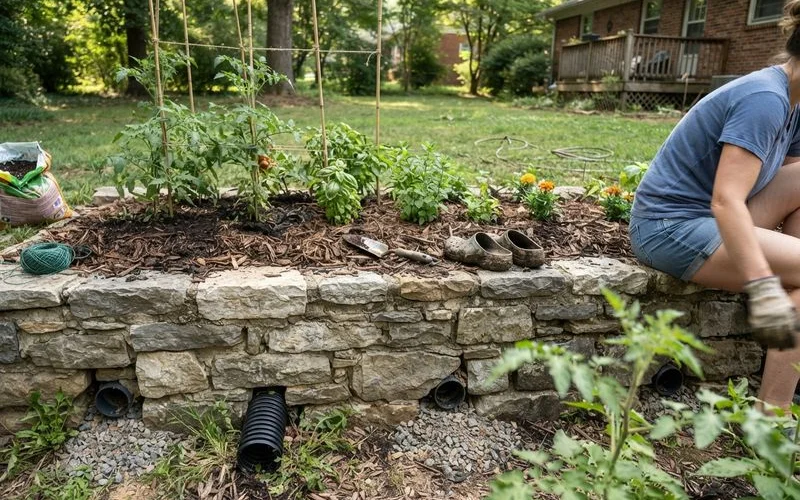
A retaining wall that is properly designed, permitted where required, and built to code shifts a meaningful amount of liability protection toward the property owner if something later goes wrong from ordinary wear. A wall built without an engineer’s input on a taller or more complex slope, or without a required permit, removes some of that protection, since it is harder to demonstrate the work met the applicable safety standard. If your project includes anything beyond a short, simple wall, ask whether an engineer’s stamp is advisable or required in your jurisdiction. Wall height and complexity also drive the price; see our hardscape and patio design cost guide for what changes the number.
Practical steps that reduce dispute risk
Talk to your neighbor before any grading or wall work near the property line, even if it is not required. A short conversation about what you are planning and how it might affect drainage on their side avoids a much longer dispute after the fact. Keep documentation of your design plan, any permits, and photos of the site before and after the work, since this evidence matters if a dispute arises later.
What a good designer does here
A designer experienced with boundary-adjacent work will factor drainage direction into the plan from the start, rather than treating it as an afterthought once the design is otherwise finished. Ask directly how your project’s grading affects water flow toward each neighboring property, and get that answer in writing as part of the design documentation.
When to bring in a professional beyond the designer
For any wall over a few feet, any project where water has previously caused a dispute, or a site with a genuinely complicated slope, it is worth having a structural engineer and, if a dispute already exists, a local attorney review the plan before construction starts. The cost of that review is small compared to the cost of a wall failure or a drainage lawsuit after the fact.
Compare designers experienced with retaining walls and drainage from our home page, and see our methodology for how listings here are evaluated.
FAQ
- Am I liable if my yard's grading sends extra water onto my neighbor's property?
- General information, not legal advice: many jurisdictions follow a reasonable-use standard, meaning you can be liable if you alter natural drainage in a way that unreasonably increases water flow onto a neighbor's land, especially if a design change is the direct cause.
- Who is responsible if a retaining wall fails and causes damage?
- This depends on the cause, whose property the wall sits on, and whether it was built to code with a proper permit. If poor construction or an unpermitted design is the cause, liability often points back to the property owner or the contractor who built it.
- Should I tell my neighbor before building a retaining wall or regrading near the property line?
- It is not always legally required, but it is a practical step that avoids disputes later, especially for any work that could plausibly change how water moves onto their property.
- Does homeowners insurance cover drainage or retaining wall disputes?
- Coverage varies significantly by policy and by the nature of the claim. Property damage from a wall failure may be covered under some policies, while ongoing drainage disputes with a neighbor often are not. Check your specific policy or ask your agent.
Related on this site
- Browse hardscape & patio design providers
- Best hardscape & patio design in Charlotte Metro →
- Hardscape and patio design cost: what changes the price
- Permits, HOA rules, and property lines to check before a landscape design project
- Municipal codes and ADA basics for commercial landscape design projects
- All guides →