
Hardscape and patio design cost: what changes the price
By Rod Burnett · Updated 2026-06-17
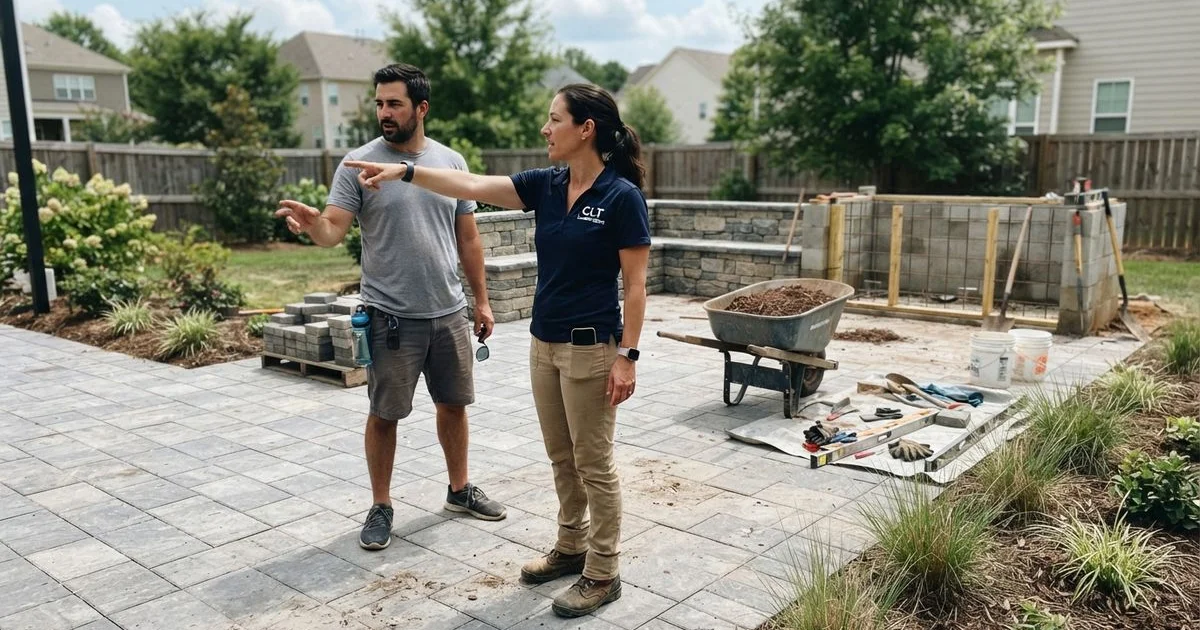
A patio quote can look wildly different from one contractor to the next, and most of the spread comes down to three decisions made at the design stage: size, material, and added features. Here is how hardscape and patio design pricing actually breaks down before you request quotes.
Size sets the baseline
Hardscape cost is calculated per square foot, so the biggest lever on total cost is simply how much area you are covering. A small 200 square foot seating patio costs a fraction of a full 800 square foot outdoor living area, even before material or features enter the picture. Deciding on size early, based on how you actually plan to use the space, keeps the rest of the budget conversation grounded.
Material moves the price more than almost anything else
Material choice is where most of the cost variation comes from. Gravel and decomposed granite sit at the low end. Stamped concrete costs more. Concrete pavers, the most common choice for Charlotte-area patios, cost more still. Natural stone and flagstone sit at the top of the range, driven by both material cost and the labor needed to cut and set irregular pieces.
| Material | Relative cost per square foot | Typical trade-off |
|---|---|---|
| Gravel / decomposed granite | Lowest | Needs periodic top-up, less formal look |
| Stamped concrete | Low-moderate | Fewer joints, can crack over time |
| Concrete pavers | Moderate | Durable, wide style range, most common choice |
| Natural stone / flagstone | Highest | Most upscale look, longest lifespan |
Added features push the total up fast
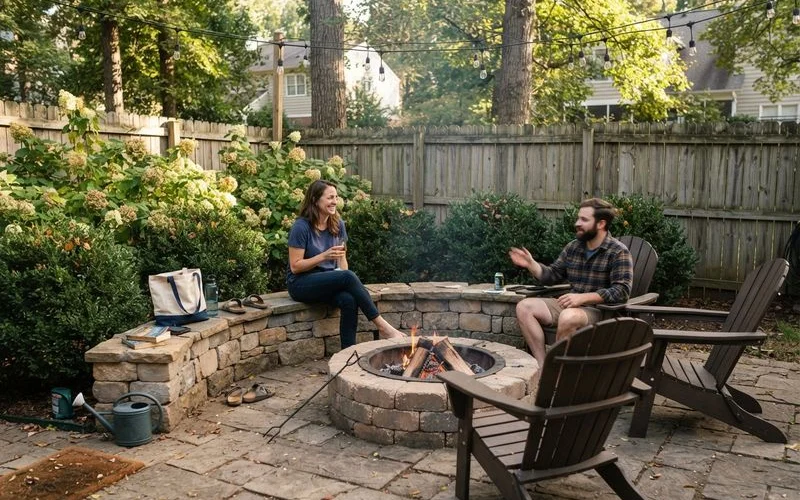
A simple patio with no extras sits at the base cost. Adding a seat wall or steps increases the total by roughly a quarter. Adding a fire pit or an outdoor kitchen area increases it by more than half, since that work involves gas lines, electrical runs, or plumbing on top of the hardscape itself. If budget is tight, it is often cheaper to design the patio to accommodate a fire pit or kitchen later than to build the utility rough-in now for a feature you have not committed to.
Site conditions can add a hidden cost
A flat, easy-access yard keeps installation straightforward. A sloped site, poor drainage, or tight equipment access adds cost that shows up in the contractor’s quote rather than the design fee itself, since it usually means more grading, a retaining feature, or hand-carrying material where a machine cannot reach. Ask early whether your site has any of these conditions so the design accounts for them instead of surprising you at the bid stage. If your project includes a retaining wall near a property line, liability is worth understanding too; see our guide on who is liable for drainage and retaining wall problems between neighbors.
Getting a starting number before you call anyone
If you want a rough range before reaching out to a designer, our hardscape and patio cost estimator on the home page uses your patio size, material choice, and added features to produce a ballpark figure. It will not replace a site-specific quote, but it gives you a number to compare proposals against.
How to keep the quote honest
Ask for a breakdown by material, labor, and any added features, rather than one lump sum. This makes it much easier to compare two contractors’ bids, since one might quote pavers where another assumes stamped concrete, and the totals will not mean the same thing without a breakdown.
Comparing more than one proposal is worth the extra week it takes, since hardscape work is expensive to redo once it is poured or set. Start from our home page to browse designers, and see how we rank and evaluate them before choosing.
FAQ
- What is the cheapest hardscape material?
- Gravel or decomposed granite typically costs the least per square foot. Concrete pavers sit in the middle range, and natural stone or flagstone runs highest due to material and labor.
- Does adding a fire pit or outdoor kitchen area cost a lot more?
- Yes, meaningfully more. These features add plumbing, gas, or electrical work on top of the base hardscape cost, and a fire pit or kitchen area can add well over a third to the total project cost.
- Is a seat wall worth the added cost?
- It depends on how you use the space. A seat wall or steps adds a noticeable amount to the base cost but also adds usable seating and can double as a retaining feature on a sloped site, which sometimes offsets a separate grading cost.
- Should the hardscape design fee be separate from installation?
- Usually yes. The design fee covers the layout and material plan; installation is priced separately, often by the contractor who builds it, once the design is finalized.