
Outdoor lighting and irrigation design cost explained
By Rod Burnett · Updated 2026-06-23
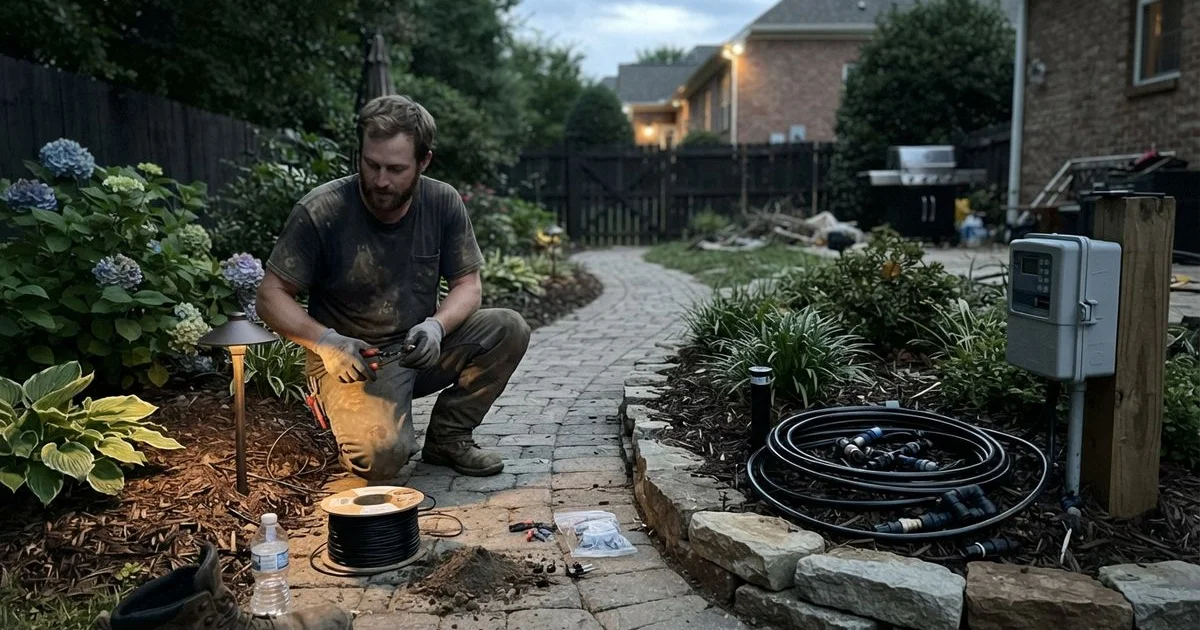
Lighting and irrigation get bundled together in a lot of design conversations because they are both electrical or mechanical systems layered onto a finished landscape, but their costs are driven by different things. Here is how each one breaks down for lighting and irrigation design projects.
Landscape lighting: fixture count and quality drive the cost
Lighting cost scales with two variables: how many fixtures you need and what quality tier you choose. Most yards land somewhere between ten and twenty fixtures to cover walkways, tree uplighting, and accent points near the entry. Fixture quality moves the price meaningfully: basic LED fixtures cost the least, standard brass or composite fixtures sit in the middle, and premium copper or architectural fixtures cost well over double the basic tier per fixture.
| Fixture tier | Relative cost per fixture | Typical lifespan |
|---|---|---|
| Basic LED | Lowest | Shortest, prone to fading finish |
| Standard brass or composite | Moderate | Good middle ground for most yards |
| Premium copper or architectural | Highest | Longest, ages well outdoors |
Beyond fixtures, every lighting project includes a base cost for the transformer and wiring, so a very small project (just a few path lights) still has a fixed floor cost before fixture count is factored in.
Irrigation: coverage area, system type, and zones drive the cost
Irrigation pricing works differently. The main cost driver is coverage area, priced per square foot, adjusted by system type. Drip irrigation for planting beds costs the least per square foot. A standard in-ground sprinkler system for lawn areas costs more. A smart controller system, which adjusts watering based on weather data, adds the most to the base cost but can reduce water bills over time.
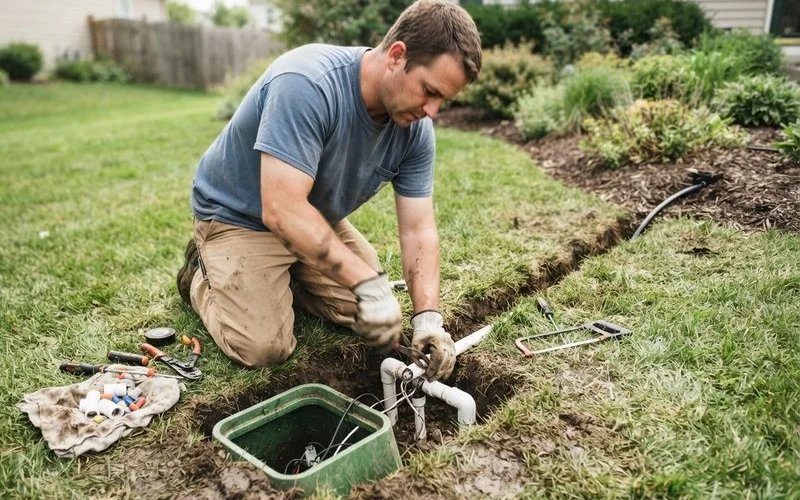
Zone count adds a per-zone cost on top of the area-based price, since each zone needs its own valve and control wiring. A yard split into many small zones for precise plant-specific watering costs more to install than the same square footage covered by fewer, larger zones.
Doing both together
Homeowners often plan lighting and irrigation in the same design pass as a planting or hardscape project, since trenching for irrigation lines can happen at the same time as any other digging on site, which saves on labor compared to trenching twice at different times. If hardscape is part of the same project, our hardscape and patio design cost guide breaks down what changes that price too. If you know both are coming, mention it at the first design consultation so the designer can sequence the work.
Getting a starting estimate
If you want a ballpark before contacting a designer, the outdoor lighting and irrigation cost estimators linked from our home page use your fixture count or coverage area, system type, and any added features to produce a rough range. Treat it as a starting point for the budget conversation, not a final quote; a site visit will confirm water pressure, wiring runs, and any obstacles that change the number.
What to ask before signing
Ask whether the quote includes ongoing costs, like a seasonal startup and winterization for irrigation, or if that is billed separately each year. Ask how the lighting system’s transformer is sized, since an undersized transformer is a common cause of dim or flickering fixtures down the line. Getting these answers in writing avoids surprises after installation.
Compare more than one designer for these systems from our home page, and see our methodology for how we evaluate the providers listed here.
FAQ
- Is landscape lighting or irrigation design more expensive?
- It depends on scale, but a mid-size irrigation system with several zones often costs more overall than a lighting design, since irrigation involves trenching and plumbing across the whole yard rather than surface-mounted fixtures.
- How many light fixtures does a typical yard need?
- Most yards use somewhere between ten and twenty fixtures to cover paths, trees, and accent points, though this varies with lot size and how much of the yard you want lit.
- How many irrigation zones do I need?
- A common rule of thumb is one zone per 1,500 to 2,000 square feet of coverage area, though plant type and sun exposure can change that. More zones mean more precise watering but a higher install cost.
- Do smart irrigation controllers cost a lot more?
- They add a noticeable premium over a standard controller, but they can reduce water waste over time by adjusting for weather, which partly offsets the added upfront cost.