
How the landscape design process works, from first call to finished plan
By Rod Burnett · Updated 2026-06-08
Most homeowners who call a landscape designer for the first time have never worked with one before, so the process itself is the biggest unknown. It is more structured than people expect, and less mysterious once you see the stages laid out. Here is what actually happens between that first call and a plan you can hand to a contractor.
Before you search for options on the directory home page, it helps to know roughly what you are walking into, since the process shapes what a fair price and a fair timeline look like.
Step 1: the initial consultation
Most designers start with a phone call or a short site visit to understand the scope. They are listening for your budget range, how you use the yard, any drainage or slope problems you have already noticed, and whether you are picturing a full redesign or a single feature like a patio or a planting bed. Some designers charge a flat fee for this visit; others fold it into the design cost if you move forward.
This is also the stage where a mismatch surfaces fastest. If a designer is vague about their process or dodges questions about cost ranges, that is worth noting before you commit to anything further.
Step 2: site analysis and measurements
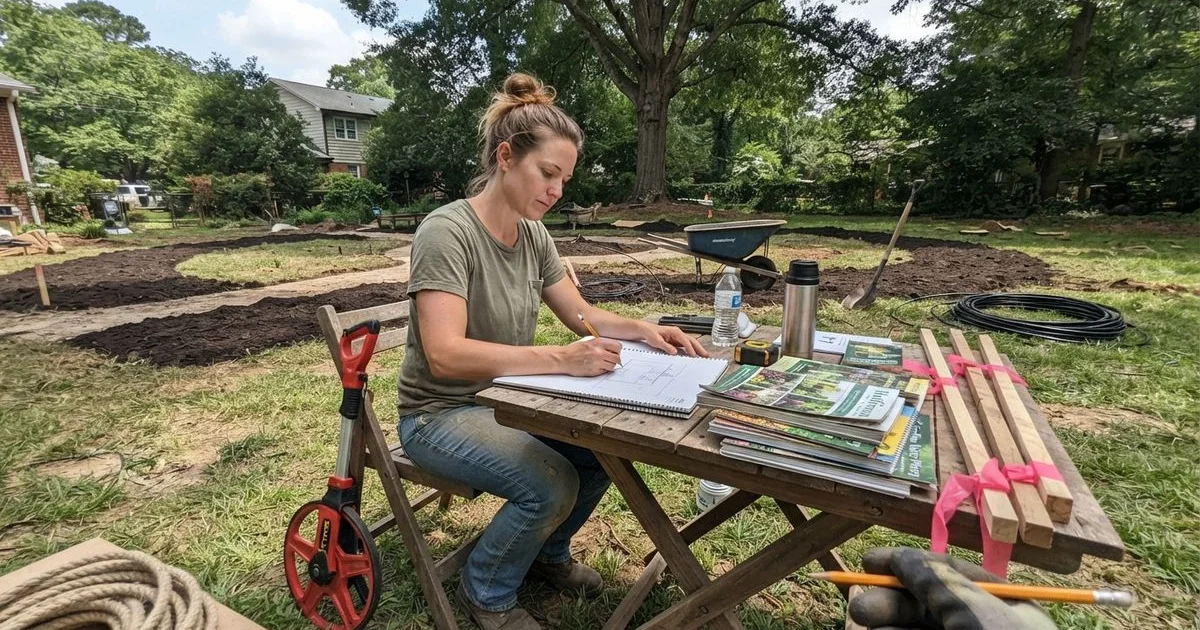
Next comes the technical groundwork: measuring the lot, noting sun exposure, soil drainage, existing trees and utilities, and any slope that affects water flow. For sites with real grading or drainage issues, this step takes longer and may involve a follow-up visit. Skipping it is how yards end up with water pooling against a foundation two years later.
Step 3: concept design and revisions
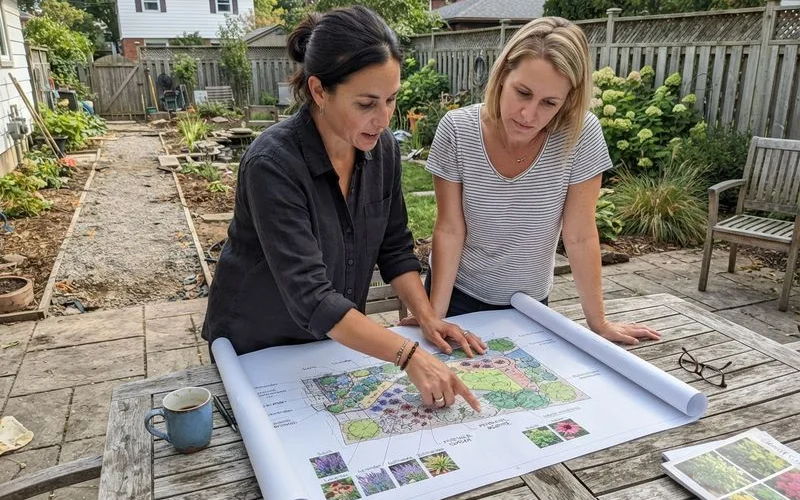
With the site data in hand, the designer produces a concept plan, usually a scaled drawing showing planting beds, hardscape areas, and any lighting or irrigation zones. You will typically get one meeting to review it and request changes. Keep your feedback specific: “move the patio ten feet from the fence” gets acted on faster than “make it feel more open.”
Step 4: the finished plan and handoff
Once revisions are settled, you receive a finished plan, sometimes with construction documents if you are moving into installation. At this point you decide whether to have the same firm install the work, hire a separate contractor, or phase the project over a few seasons.
DIY vs hiring a designer: where the line usually falls
A lot of homeowners ask whether they can skip the designer and go straight to a contractor or a DIY layout. For a single planting bed or a small patio replacement, that is often reasonable. For anything involving grading, drainage, or a yard with more than one function (entertaining, play space, garden beds, screening), a plan tends to save money by catching conflicts before anyone digs.
| Stage | Typical duration | What you are responsible for |
|---|---|---|
| Initial consultation | 1 visit or call | Budget range, priorities, photos |
| Site analysis | 1-2 weeks | Access to the property |
| Concept design | 2-3 weeks | One clear round of feedback |
| Revisions | 1-2 weeks | Specific, consolidated notes |
| Finished plan | 1 week | Decide on installer |
What slows the process down
The most common delay is not the designer, it is unclear feedback during revisions. A close second is discovering a drainage or utility issue mid-process that was not visible during the initial site visit. Asking a designer directly how they handle mid-project surprises is a fair question to ask before signing anything.
Charlotte Metro’s mix of clay-heavy soil and rolling terrain in areas like south Charlotte and the Lake Norman side of the metro means site analysis often runs a little longer here than in flat, sandy-soil markets. That is normal, not a red flag.
Once you understand the stages, it becomes easier to judge whether a proposal timeline is realistic or padded. Before you sign anything, our guide on questions to ask before hiring a landscape designer covers what separates a smooth working relationship from a frustrating one. For more on how we evaluate and rank the designers listed here, see our methodology.
FAQ
- How long does the landscape design process take from start to finish?
- For a typical residential yard, expect roughly four to ten weeks between the first consultation and a finished plan. Larger properties, multiple revision rounds, or a design that includes hardscape, lighting, and irrigation together push toward the longer end.
- Do I need a designer, or can a contractor just start building?
- A contractor can install without a plan, but skipping design usually means guessing at layout, drainage, and plant placement on the fly. A plan is worth the extra time when the project involves grading, a patio, more than a small planting bed, or a budget you want fixed before crews show up.
- How many rounds of revisions are normal?
- Most design agreements include one or two revision rounds. Beyond that, designers often charge hourly, so it helps to consolidate your feedback into a single round rather than sending changes one at a time.
- What should I bring to the first meeting?
- Photos of your yard in different seasons, a rough budget range, and a list of how you actually use the space (kids, pets, entertaining, low upkeep) matter more than Pinterest boards. Designers can pull inspiration images themselves once they know your constraints.