Native and sustainable landscape design vs traditional: which fits your yard
By Rod Burnett · Updated 2026-06-29
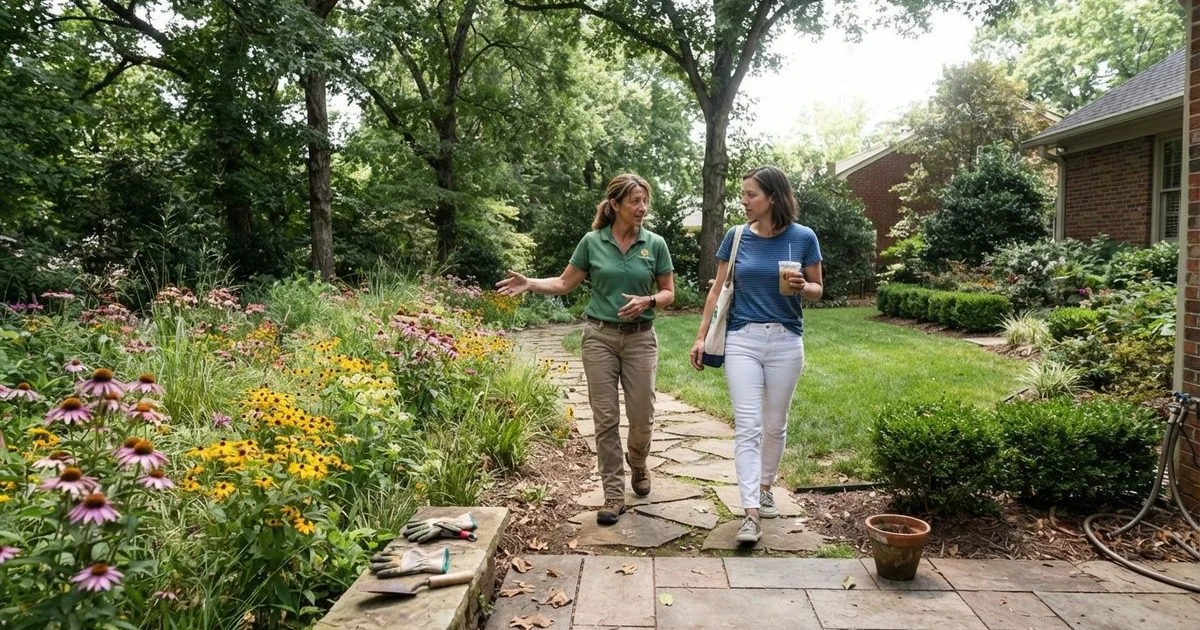
Homeowners researching sustainable and native landscape design usually assume it means giving up a designed, polished look for something wilder. That is not really the trade-off. The real differences are in upfront cost, long-term maintenance, and how the yard performs with water and drainage, not necessarily appearance.
What each approach actually means
A traditional landscape design leans on common ornamental plants (many not native to the region), a manicured lawn, and a planting plan built primarily around visual composition. A native or sustainable design prioritizes regionally adapted species, reduces or reshapes lawn area, and often incorporates features like rain gardens or bioswales to manage stormwater on site rather than sending it straight to a storm drain.
Upfront cost is closer than people expect
Native plant material is not automatically cheaper. Some native perennials and grasses cost similar to common ornamentals, and specialty features like a rain garden or expanded planting beds in place of lawn can add design and installation cost rather than reduce it. Where native design usually saves money is over time, not on day one.
| Factor | Traditional design | Native / sustainable design |
|---|---|---|
| Upfront plant cost | Comparable | Comparable, occasionally lower for grasses |
| Water use after establishment | Higher, ongoing | Lower once established |
| Fertilizer and pesticide need | Higher | Lower |
| Lawn area | Usually larger | Often reduced |
| Design flexibility for a formal look | High | High with the right plant choices |
Maintenance is where the difference shows up
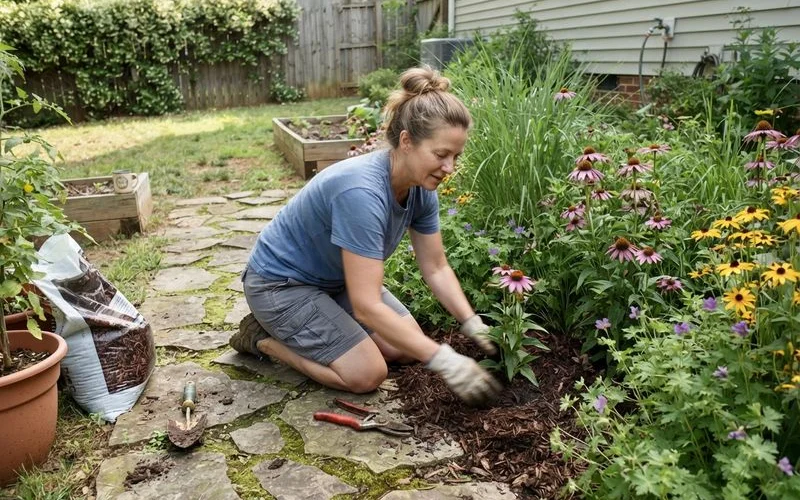
A traditional lawn-heavy design needs regular mowing, fertilizing, and irrigation to stay healthy through a Charlotte summer. A native design, once plants are established (typically one to two growing seasons), needs less water and less fertilizer, since the plant palette is suited to the local rainfall and soil. The trade-off is patience: a native design often looks sparse in its first year while root systems establish, which surprises homeowners expecting an instant, full look.
Appearance depends on the design, not the plant list
A native design can look just as intentional and structured as a traditional one when a designer applies the same principles: defined bed edges, repetition of a few key species, and clear sightlines. The messy, overgrown look some people associate with native plantings usually comes from a lack of design, not from the plants themselves. If a polished look matters to you, say so directly. A good designer can build structure into a native plant palette the same way they would with traditional ornamentals.
A middle path most homeowners actually choose
Very few Charlotte-area projects go fully one way or the other. A common approach uses native species in slopes, wet spots, and areas the homeowner does not want to manage intensively, while keeping a more traditional, higher-maintenance planting near the entry or patio where a specific look matters most. This lets you cut water use and maintenance where it matters least visually, without giving up a polished front-of-house appearance.
How to decide
If reducing water use and long-term maintenance matters more to you than an immediately full, manicured look, lean native. If you want a fully finished appearance from day one and are comfortable with the ongoing watering and fertilizing that involves, a traditional approach or a heavier mix toward it makes more sense. Either way, ask your designer to show you both options during the concept stage before committing. Whichever direction you lean, our guide on questions to ask before hiring a landscape designer covers how to vet a designer’s experience with either style.
Browse designers who work in both styles from our home page, and see our methodology for how we evaluate them.
FAQ
- Is native plant landscaping cheaper than a traditional design?
- Not always upfront, since some native species and rain gardens cost similar or more to install than common ornamentals. The savings usually show up later, in reduced watering, fertilizer, and replacement costs.
- Does a native design look less polished than a traditional one?
- It depends on the design, not the plant list. A well-designed native landscape uses the same structure principles (layering, repetition, defined edges) as a traditional one; an unplanned native planting can look messy the same way an unplanned traditional bed can.
- Can I mix native and traditional plants in one design?
- Yes, and most Charlotte-area yards end up somewhere in between rather than fully committing to one approach. A designer can build a plan that uses native species where they do the most work (slopes, wet areas, pollinator zones) and traditional ornamentals near the entry where a specific look matters most.
- Do native plants need less water once established?
- Generally yes, since native species are adapted to the regional rainfall pattern and typically need less supplemental irrigation after their first one to two growing seasons.