
Safety features to plan for in a pool and outdoor living design
By Rod Burnett · Updated 2026-07-18
This is general safety information, not a substitute for checking your local code requirements or consulting a qualified pool safety professional.
A pool and outdoor living design project involves more safety planning than a typical patio, since water, wet surfaces, and often cooking equipment all sit close together. Building these considerations into the design stage is more effective than retrofitting them after installation.
Fencing and barrier requirements
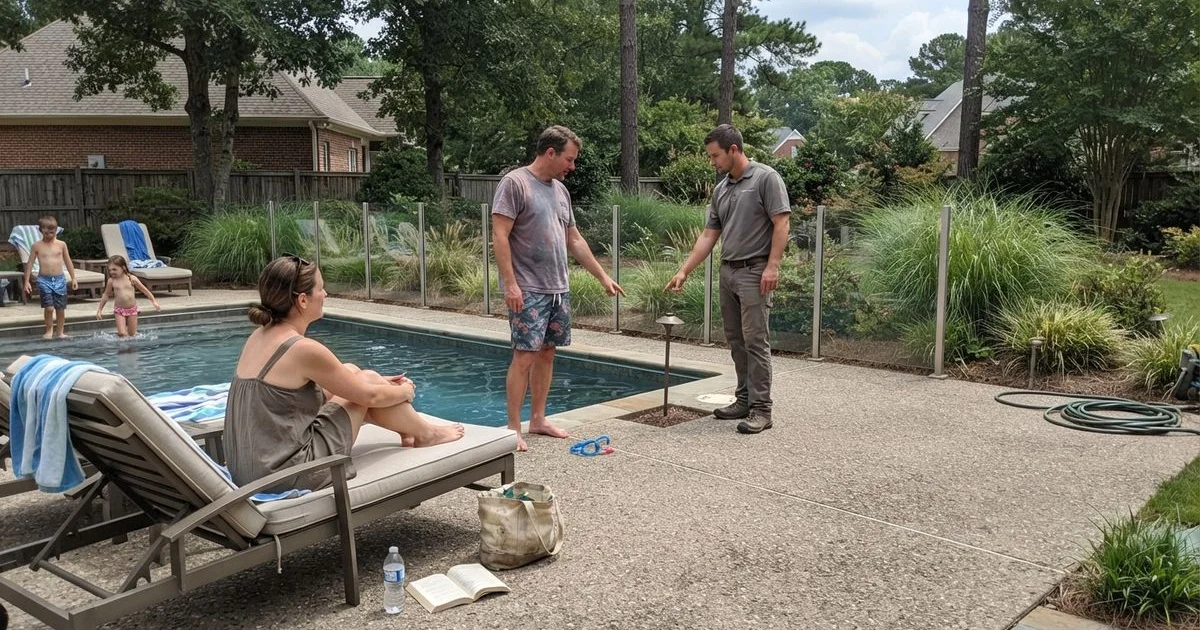
Most municipalities in the region require some form of barrier around a residential pool, typically a fence of a minimum height with a self-latching, self-closing gate, though specific requirements vary by jurisdiction. This is worth confirming with your local building department before finalizing a design, since retrofitting a barrier after a pool is installed is more expensive and disruptive than planning for it from the start.
| Safety element | What to plan for | Why it matters |
|---|---|---|
| Pool barrier | Meets local height and gate-latch requirements | Often a code requirement, and reduces accidental access |
| Surface material | Textured or slip-resistant finish near water | Wet, polished surfaces are a common slip hazard |
| Path and step lighting | Planned as part of the design, not added later | Reduces nighttime trip and fall risk |
| Gas and electrical placement | Kept a safe distance from pool water | Reduces shock and fire hazard risk |
Surface material matters more than it looks
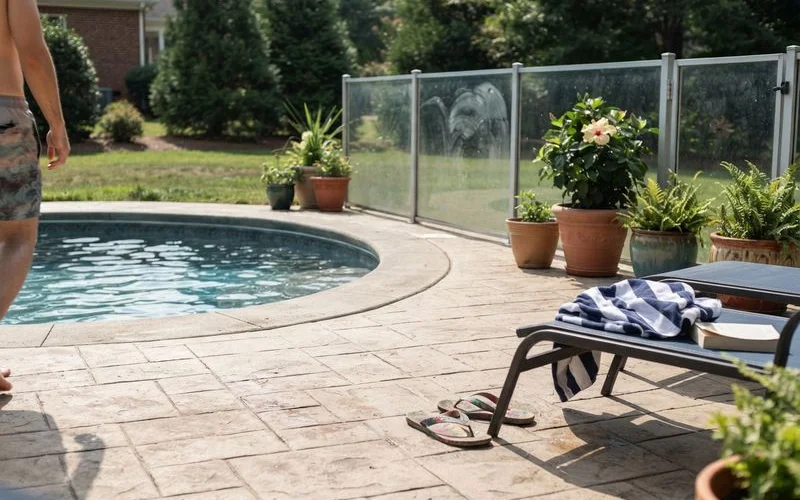
A smooth, polished concrete or stone surface can look great in photos but becomes noticeably slick once wet, which is a real concern directly around a pool deck. Textured or brushed concrete, certain natural stone finishes, and slip-resistant pavers reduce this risk while still giving you a range of design options. Ask your designer specifically about the slip rating of any surface material being proposed for areas within a few feet of the water.
Lighting is a safety feature, not just an aesthetic one
Path and step lighting around a pool and outdoor living area does more than look good at night, it meaningfully reduces the chance of a trip or fall around steps, transitions between surfaces, and the pool edge itself. This is worth planning into the lighting design from the start rather than treating it purely as an ambiance decision, since retrofitting adequate safety lighting after the hardscape is finished is more disruptive than planning it in from day one.
Outdoor kitchens add their own considerations
If your outdoor living design includes a kitchen or cooking area near the pool, keep gas lines and electrical elements a safe distance from the water, ensure any enclosed cooking area has proper ventilation, and use slip-resistant flooring around the cooking zone specifically, since spills and splashes are common there in addition to pool water. These are worth raising directly with both your designer and the contractor handling the rough-in work. Standing water elsewhere in the yard carries its own safety concerns too; see our guide on standing water, drainage, and mosquito safety in yard design.
What to ask your designer
Ask specifically how the design accounts for local pool barrier requirements, what surface materials are being used within the splash zone around the pool, and how lighting is planned for steps and level changes. A designer experienced with pool and outdoor living projects should have clear, specific answers rather than general reassurance.
Building safety in from the start
Retrofitting safety features after a pool and outdoor living project is finished costs more and often looks like an afterthought, a fence added around an existing deck, lighting bolted on after the fact. Raising these considerations during the design stage, before anything is built, gets a better result on both safety and appearance.
Compare designers experienced with pool and outdoor living projects from our home page, and see our methodology for how listings here are evaluated.
FAQ
- Is a pool fence legally required in North Carolina and South Carolina?
- This is general information, not legal advice: most municipalities in the region require a barrier meeting a minimum height and self-latching gate requirement around a residential pool, though exact specifications vary by jurisdiction, so confirm with your local building department.
- What surface is safest around a pool?
- Textured or brushed concrete, certain natural stone finishes, and slip-resistant pavers are common choices, since a smooth, polished surface becomes noticeably more hazardous when wet.
- Do outdoor kitchens near a pool need special design consideration?
- Yes. Keeping gas and electrical elements a safe distance from pool water, ensuring proper ventilation, and using slip-resistant flooring around cooking areas are all worth discussing directly with your designer and contractor.
- How does lighting factor into pool area safety?
- Adequate path and step lighting around a pool reduces nighttime trip and fall risk substantially, and it is worth planning as part of the design rather than adding after the fact.