
Standing water, drainage, and mosquito safety in yard design
By Rod Burnett · Updated 2026-07-08
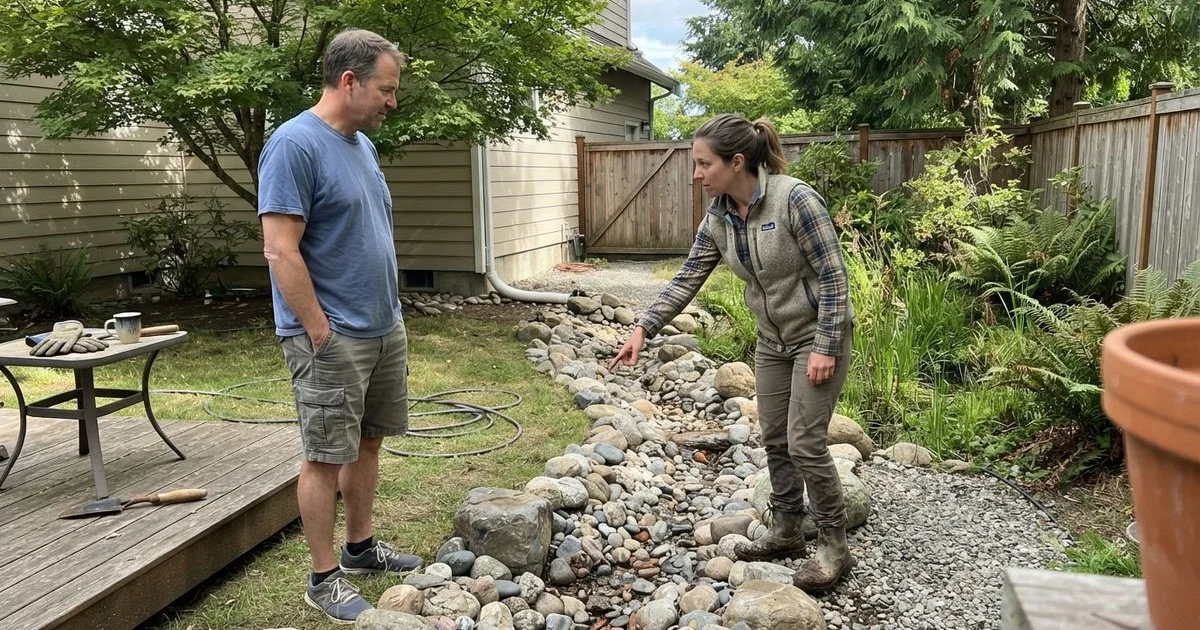
This is general safety information, not a substitute for a professional site evaluation. If you suspect a drainage problem is affecting your home’s foundation, have it assessed directly.
Standing water in a yard often gets treated as a cosmetic annoyance, a soggy patch that is inconvenient to mow around. It is worth taking more seriously than that, since it is also the main driver behind mosquito activity and, over time, moisture problems near a home’s foundation.
How to recognize a real drainage problem
Water that stands for more than a day or two after a normal rain is the clearest sign something is not draining correctly, as opposed to a puddle that disappears within a few hours. Other signs include soil that stays soggy well after the rest of the yard dries, grass that grows unusually lush in one specific low spot, and water visibly pooling against the foundation or a patio slab. Any of these are worth having a designer look at, even if the area seems small.
Why standing water is a mosquito problem, and more than an eyesore
Mosquitoes lay eggs in still water, and the cycle from egg to biting adult can take as little as about a week in warm weather. This means even a small amount of standing water, a clogged low spot, a poorly draining container plant, a low patch near a downspout, can support repeated breeding cycles through a Charlotte Metro summer. Addressing the drainage source is more effective long-term than repeated pesticide treatments aimed at adult mosquitoes.
| Problem area | Common cause | Typical design fix |
|---|---|---|
| Soggy patch in the lawn | Poor grading, compacted soil | Regrading or a French drain |
| Water pooling against foundation | Grading that slopes toward the house | Regrading away from the foundation |
| Standing water after every rain | Low spot with no outlet | Dry creek bed or rain garden |
| Erosion channel during storms | Concentrated runoff with no controlled path | Drainage swale or rock-lined channel |
Design solutions that do not require a full regrade
For a localized problem, a French drain (a gravel-filled trench with a perforated pipe) can carry water away from a specific low spot without disturbing the whole yard. A rain garden, a planted basin designed to collect and slowly absorb runoff, can turn a wet spot into a design feature rather than just fixing it invisibly underground. A dry creek bed does something similar above ground, giving water a defined path to follow during heavy rain instead of spreading and pooling.
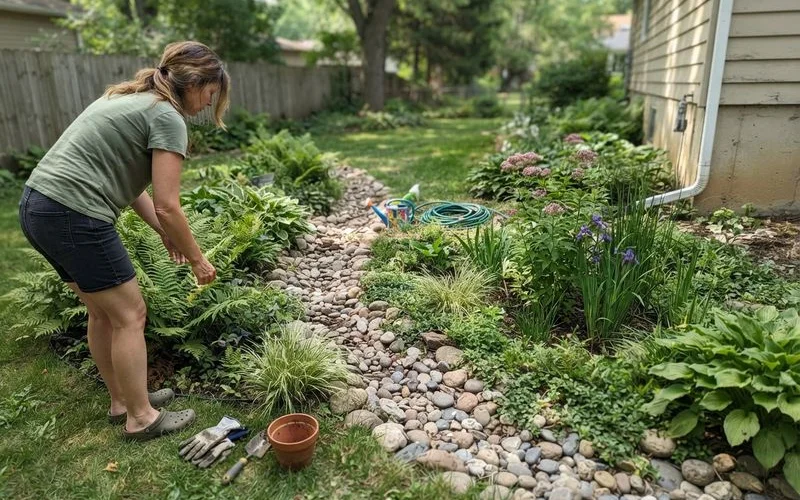
When the problem is bigger than one spot
If multiple areas of the yard hold water, or if the whole lot slopes toward the house, a localized fix will not solve it. That usually points to a broader grading issue that needs a wider design response, potentially including a full regrade before any new planting goes in. A designer or drainage-focused contractor can assess whether you are dealing with one bad spot or a lot-wide grading problem. Standing water near a pool deck raises its own safety questions too; see our guide on safety features for a pool and outdoor living design.
What to ask before hiring someone to fix it
Ask specifically what is causing the water to stand, not just what feature will be installed. A French drain installed in the wrong spot will not fix a problem caused by grading that slopes the wrong direction across the whole yard. A good answer explains the water’s actual path before proposing a fix.
Compare designers with drainage experience from our home page, and see our methodology for how listings here are evaluated.
FAQ
- How can I tell if my yard has a real drainage problem?
- Water that stands for more than a day or two after rain, soggy patches that never fully dry, or water pooling against your foundation are the clearest signs. Grass that stays green and lush in one exact spot after everything else dries out is also a common tell.
- Does standing water actually increase mosquito risk?
- Yes. Mosquitoes need still water to breed, and it takes as little as a week for eggs laid in standing water to become biting adults. Even small amounts, in a low spot, a clogged gutter runoff area, or a poorly draining planter, can support a breeding cycle.
- What design features fix drainage without a full regrade?
- A French drain, a dry creek bed, or a rain garden can redirect or absorb water in a specific problem spot without regrading the whole yard. A full regrade is usually reserved for more widespread pooling or a slope directing water toward the house.
- Is standing water near a foundation a safety issue or just a nuisance?
- Both, and the safety side matters more over time. Water sitting against a foundation for extended periods can contribute to foundation and moisture problems in the house, on top of the mosquito and slip-hazard concerns in the yard itself.